
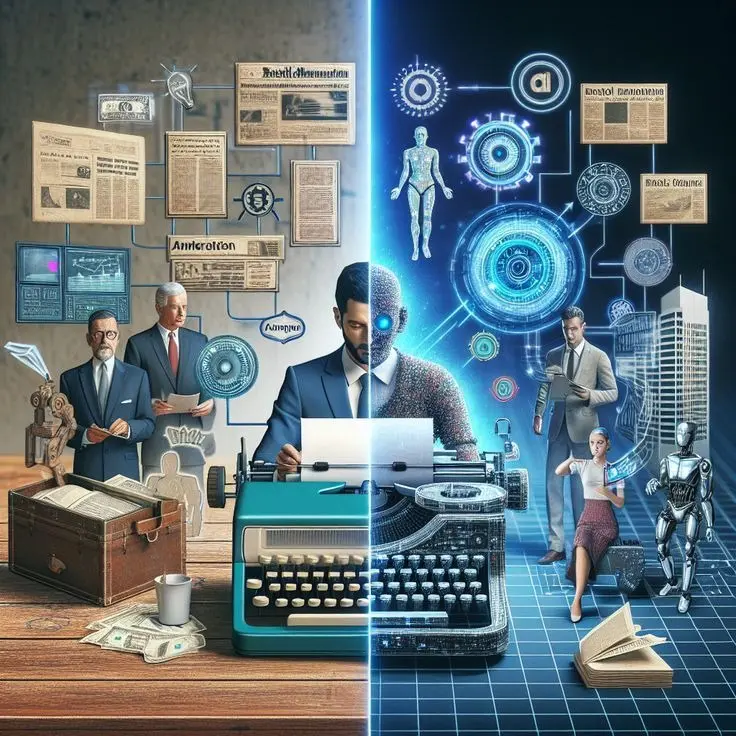
The Evolution from Traditional Marketing to Digital Marketing
Did you ever press pause in the middle of scrolling and wonder about the transition from newspaper ads to Instagram Reels? I, for my part, am one of those who regularly wonder about it. The moment the idea of marketing change crosses my mind, I immediately go back to the time when my parents only took TV commercials and huge billboards into account. It is different now; I find my phone to be more reliable on many occasions than the external world. This alteration is a major one in terms of how brands talk and how people act.
That is why I decided to go in-depth and explore how traditional marketing has become the digital marketing of the present day and how it affects our everyday choices, buying habits, and even attention time.
Marketing’s Transformation
I can still recall when I witnessed my first digital ad. It was a rather basic banner for a mobile phone promotion. It did not shout out like a TV commercial, yet it was talking to me, somehow. That occasion got me thinking: How is this small online box competing with giant billboards?
Many years later, during my digital marketing studies, I finally got the answer: data, speed, targeting, and creativity. These were the four elements that did the magic. Traditional marketing had been successful for decades, still when digital marketing came with the promise: “I know you, I know what you’re looking for, and I can speak to you”, the world changed. Such a level of private connection remains the reason why digital marketing is so strong today.
What Traditional Marketing Stood For
The main reason why the traditional method of marketing was quite powerful was due to the fact that it was able to reach almost every single person in the market. This approach was very constructive in the old days when there were only a few options, and people had just a little access to the media. Companies were able to get their message across through newspapers, radio, TV commercials, banners, fliers, and billboards. That was the reason they were so effective, as people’s attention was not scattered.
Traditional marketing built trust by:
- tangible presence
- established credibility
- Consistency
- Repetition
During the prime time, it seemed that every household watched the TV ad. Thousands of eyes saw it when a billboard was placed in a busy junction. These methods were responsible for the rise of the largest brands of the 90s and early 2000s.
However, the problem was evident- no way to measure who saw it, who liked it, or who ignored it.
This time, digital marketing came into place.
The growth of Digital Marketing: A Turning Point
The growing internet changed our world. Social media is also transforming. The revolution of smartphones is also complete.
When the world talks about marketing today, it has become about targeting a particular customer at a particular moment. This is the real magic of digital marketing.
I came to know that it was during my college years that I recognised the fact that digital marketing was not a substitute for traditional marketing; rather, it was a means to track every single operation, including all the marketing indicators.
Digital marketing grew fast because:
- People are spending more time online than offline
- The data is indicative of what customers feel and want
- One can change, pause, test and optimise ads
- Content can be accessed by global audiences
- Engagement occurs immediately
Key Differences Between Traditional and Digital Marketing
Reach
Traditional marketing reaches everyone, regardless of whether they are your target audience.
Digital marketing communicates with your target audience directly. A company can select a person according to his/her age, gender, location, interests, behaviour, and even the time of activity.
Cost
Traditional marketing requires very large budgets since TV commercials, newspaper ads, and billboards are expensive.
On the other hand, digital marketing opens up opportunities for everyone without any restrictions. One can run ads with a small budget, even if they are a student or a small business.
Measurement
Results in traditional marketing are without complete measurement. They are hypothetical in this case.
The case might be that brands are working without a measure. However, the digital marketing part obviously is the real star at showing the performance on the spot. Clicks, exposures, inquiries, and turnover – all of these can be measured by different systems.
Engagement
Traditional marketing is a medium for one-way communication.
Digital marketing has made it possible for a two-way relationship between companies and customers. The customers can instantly comment, react, share, message or even complain, and this will make the level of trust even higher due to the more open and fast way of communication.
Why Digital Marketing Fits Today’s World
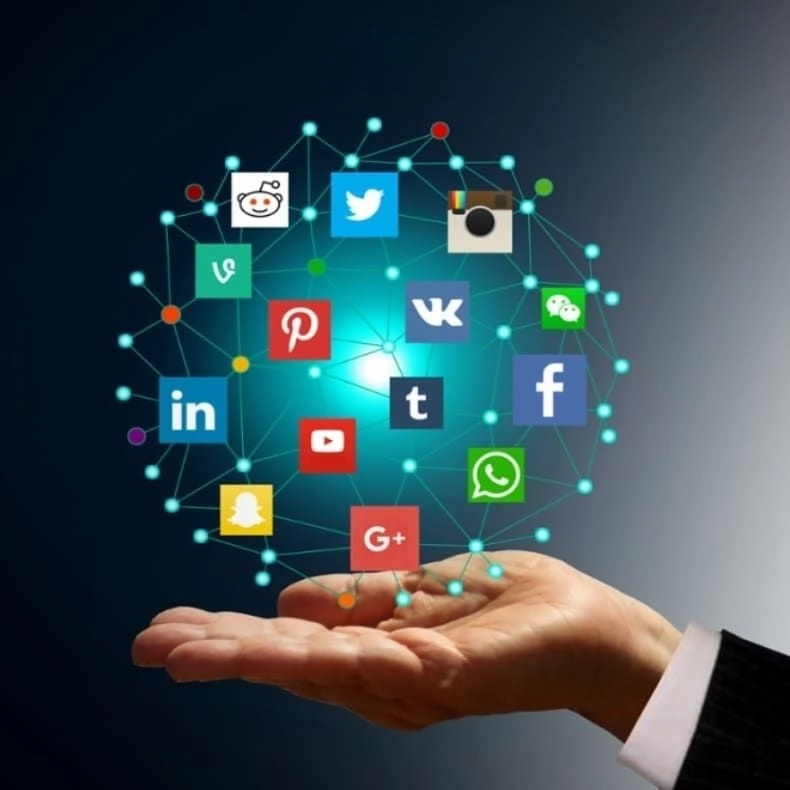
In a rapid world, people are always on the go, so they demand quick answers. One thing that we always do is to go through product reviews before buying anything. We are on Google search, then we scroll on Instagram, watch stuff on YouTube, and blog to know new stuff.
Digital marketing fits this lifestyle perfectly. Here’s why:
- User engagement is high
- Marketing activities are constant
- Customisation is simple
- Communication reaches a global audience
- Turnaround and productivity have obviously increased by the employment of AI in marketing
Brands no longer make educated guesses. They gather data to know consumer behaviours, interests and issues.
Being a student in this domain, I have come to realise that digital marketing is not just a tool—it is a must for the coming days.
How Consumer Behaviour Changed
The most essential change actually took place in us. We have shifted from being just passive viewers to also direct choosers.
In the past, it was usual for people to accept whatever brand was promoting. However, times have changed, and now the always-promising reviews, influencers, creators, and sometimes even people with no credentials on social media gain more trust and attention compared to huge ad campaigns.
Some of the key consumer changes include:
- Customers engage in competitive shopping
- Buyers opt for a narrative
- Consumers stick to the herd
- Future customers ask for a Brand with a Cause
- On the side of companies, the fast fix to waiting for your customers.
The Role of Content in Digital Marketing
One of the first things I was able to see quickly was that everything depends on the content on the internet. If it were not for the content, there would be nothing available to do with digital marketing.
Content can be:
- Videos
- Blogs
- Reels
- Product demos
- Infographics
- Stories
- Podcasts
Quality content is a versatile one, as it informs, amuses, and involves the audience. It nurtures the prospects by creating an affinity rather than closing too soon. Content is the most efficient and helpful way for digital marketing to link the brand to the customers.
My View on the Future of Marketing
Digital marketing is not the closing event, but rather the opening bell of a new era, from what the different discussions I’ve attended seem to point out. Year after year, new tools just keep on coming. AI, automation, smart targeting, voice search, and personalised experiences have been on the rise as the forces driving the next phase.
Marketing as we know it will not vanish. What will happen is that both online and offline marketing will blend in the marketer’s world, where one complements the other.
The brands that will be the winners are the ones that manage to keep a good balance between the two worlds.
Conclusion
Moving from the old-style marketing to the digital way is not just a fad but a change in attitude. This change shows the way people interact, get information, shop, and develop their trust. Going through the adaptation of mass marketing to one-to-one marketing, the journey has so far altered the way brands interact with people.
In my opinion, digital marketing is not superior only because it is contemporary but because it interacts with the customer more personally. Marketing will stay a living and dynamic entity alongside people as long as people are changing.
Excellent work done
Fantastic work
Nice
Nice
Interesting
Nice
Super work
Very good work
Good
Very nice
Super
Nice